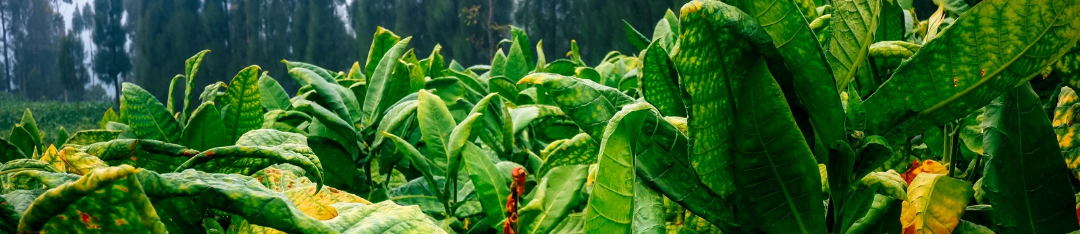
Tobacco Across Civilizations: History, Culture, and Modern Realities
From Sacred Rituals to Global Regulation: A Comprehensive Analytical Feature
Tobacco is among the few agricultural plants that have shaped global history, trade systems, cultural expression, and public health discourse simultaneously. Its story is neither singular nor linear. It is a narrative of ritual origins, economic expansion, industrial transformation, and modern regulatory scrutiny. Understanding tobacco requires historical literacy and contextual balance.
I. Indigenous Origins and Sacred Function
The primary cultivated species, Nicotiana tabacum, originated in the Americas. Archaeological and ethnobotanical studies show that Indigenous societies across the Caribbean, Mesoamerica, and parts of South America used tobacco long before European contact.
Historical records describe tobacco as a ceremonial plant used in spiritual mediation, healing practices, and diplomatic exchange. Smoke was often perceived as a conduit between the human and spiritual realms. These uses were embedded in cosmological belief systems rather than commercial structures.
Scholars such as Jordan Goodman (1993) emphasize that tobacco’s early role was cultural and ritualistic, not recreational in the modern commercial sense.
II. European Expansion and Commercialization
Following transatlantic exploration in the late 15th century, tobacco entered European markets. By the 16th and 17th centuries, it had become a widely traded commodity. Colonial territories in the Caribbean and North America expanded cultivation rapidly.
Tobacco taxation became a fiscal instrument for European states. Its trade influenced labor systems, maritime commerce, and early capitalist development. Economic historians note that tobacco contributed significantly to Atlantic trade networks.
III. Agricultural Varieties and Regional Identity
Virginia (Flue-Cured)
Higher natural sugar content and bright leaf appearance. Commonly used in blended cigarette production.
Burley (Air-Cured)
Lower sugar content with relatively higher nicotine concentration. Used to balance blends.
Oriental (Sun-Cured)
Small-leaf, aromatic varieties traditionally grown in the Eastern Mediterranean and Balkans.
Dark (Air/Fire-Cured)
Typically used in cigars, pipe tobacco, and certain traditional smokeless applications.
IV. Cultural Dimensions: East and West
Western Context
Evolved into a social commodity. Cigars were associated with diplomacy and elite circles in the 18th/19th centuries. Industrialization later mechanized production, expanding accessibility through 20th-century mass consumer culture.
Eastern Context
Integrated into Ottoman coffeehouse culture. In Southeast Asia, kretek (clove-blended) emerged as a hybrid product. In East Asia, pipe traditions preceded industrial adoption, merging with existing herbal practices.
V. Scientific Research and Public Health Turning Point
Mid-20th century epidemiological research marked a significant shift. Landmark studies, including Doll and Hill (1950), identified statistical associations between smoking and lung cancer.
Subsequent decades expanded research linking tobacco to cardiovascular disease and respiratory illness. In 2003, the WHO adopted the Framework Convention on Tobacco Control (FCTC), establishing international public health governance.
VI. Contemporary Landscape: Regulation and Transition
Today, tobacco exists within one of the most regulated consumer sectors globally. Public health objectives focus on reducing prevalence and preventing youth initiation, while the industry diversifies into alternative nicotine delivery systems.
"Understanding tobacco requires acknowledging its cultural depth, economic role, and documented health risks without reductionism or romanticization."
Academic and Historical References
- Goodman, Jordan. Tobacco in History: The Cultures of Dependence. 1993.
- Doll, R., & Hill, A.B. (1950). Smoking and carcinoma of the lung. BMJ.
- World Health Organization (2003). FCTC Report.
- Williams, Eric. Capitalism and Slavery. 1944.